Discover the Top 25 Architectural Landmarks in Dallas
Dallas offers a visual feast where history collides with innovation. The city's skyline tells a story of ambition, culture, and artistic expression, ranging from sleek modern skyscrapers to intricately designed historic buildings. For architecture enthusiasts and casual visitors alike, exploring Dallas architectural landmarks provides a unique window into the city's soul.
Every corner of the city reveals a new chapter of its growth. Whether you are admiring the Pritzker Prize-winning designs in the Arts District or stepping back in time at a preserved Art Deco treasure, you are witnessing the evolution of a major American metropolis.
In this guide, we will take you through the top 25 must-visit architectural sites. You will discover the stories behind the facades, the key features that define them, and practical tips for your visit. Whether you are looking for the best Dallas tours or planning a self-guided adventure, this list covers the essential stops.
1. Perot Museum of Nature and Science
The Perot Museum is more than just an educational hub; it is a stunning example of modern architecture Dallas is known for. Designed by Pritzker Prize laureate Thom Mayne of Morphosis Architects, the building itself is a lesson in geology and engineering.
A Design Carved from Earth
The structure features a precast concrete cube floating over a landscaped plinth. Its textured facade mimics the stratification of the earth, while a striking glass-encased escalator cuts diagonally across the exterior.
Visitor Tips
- Explore: Don't miss the T. Boone Pickens Life Then and Now Hall for dinosaur fossils.
- Engage: The interactive exhibits are fantastic for families.
- Plan: Buy tickets online in advance to skip the lines at this popular top Dallas attraction.
2. Reunion Tower
Since 1978, Reunion Tower has been the most recognizable silhouette on the horizon. Often affectionately called "The Ball," this structure is a marvel of geodesic design and engineering.
The Best Views in Town
Standing 470 feet tall, the tower offers unparalleled Dallas skyline views. The Geo-Deck provides indoor and outdoor observation areas where you can see for miles in every direction.
Why Visit?
It is a perfect starting point for any visitor. Seeing the city layout from above helps orient you for the rest of your trip. Whether you are on a solo adventure or joining Dallas sightseeing tours, the perspective from the top is unbeatable.
3. Dallas City Hall
Designed by the legendary I.M. Pei, Dallas City Hall is a masterpiece of modernist design. Completed in 1978, its inverted pyramid shape is both functional and visually arresting.
Form Follows Function
Pei designed the building to slope outward at a 34-degree angle, shielding the glass facade from the intense Texas sun while creating more floor space on the upper levels where government offices are located.
A Civic Hub
The plaza in front of the building often hosts festivals and protests, serving as a true center for civic life. The massive concrete structure represents the strength and stability of the city’s governance.
4. Margaret Hunt Hill Bridge
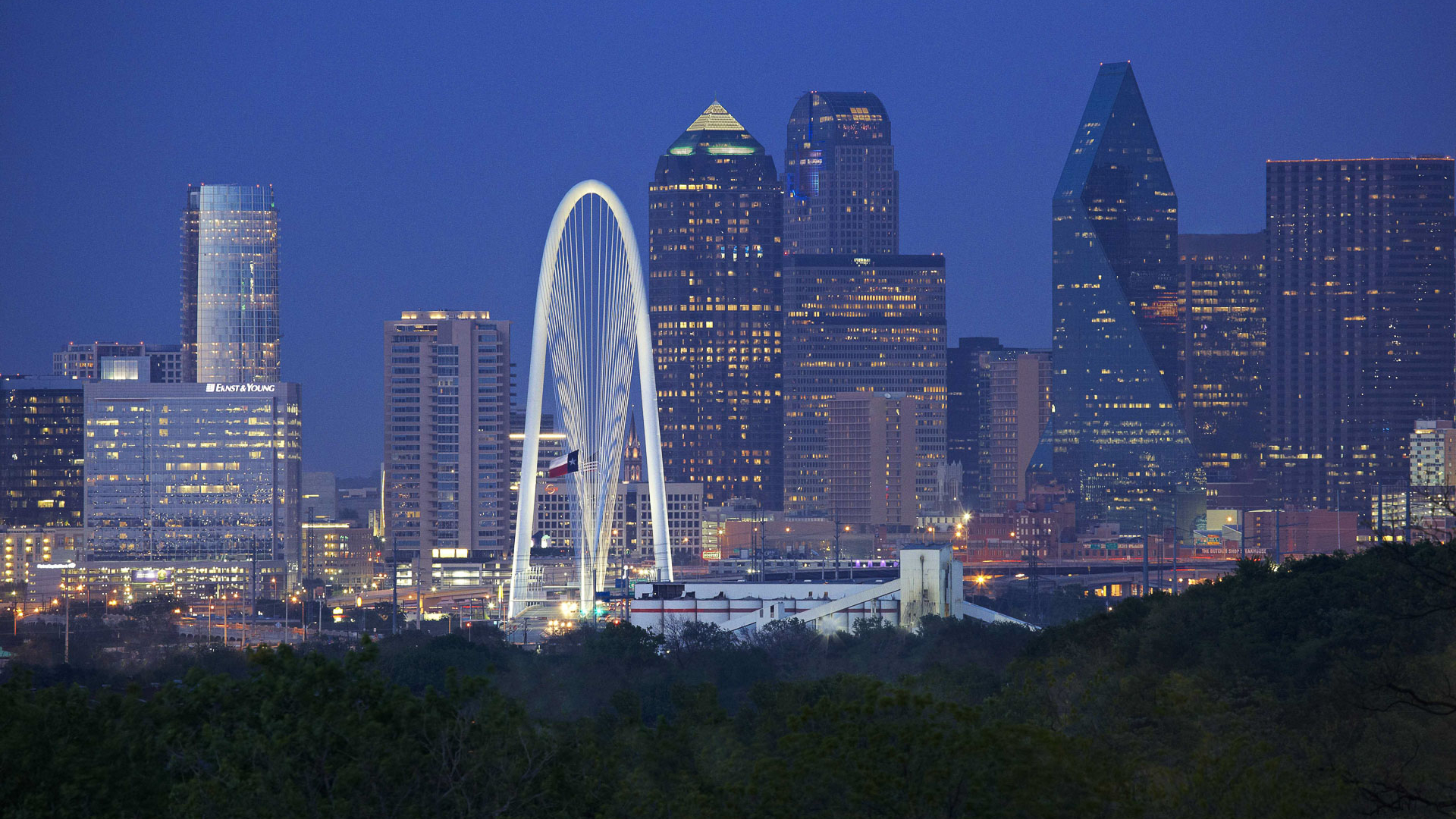
Santiago Calatrava’s Margaret Hunt Hill Bridge transformed the Dallas skyline upon its opening. This white steel bridge spans the Trinity River, connecting West Dallas to downtown with grace and style.
An Iconic Arch
The bridge features a central arch rising 400 feet into the air. Cables sweep down from the arch in a rhythmic pattern, creating an instrument-like appearance that changes with the viewing angle.
Visitor Experience
While it is a functional highway bridge, the adjacent pedestrian bridge (Ronald Kirk Bridge) offers safe, scenic spots to admire Calatrava’s work and snap photos of the city.
5. The Crescent
A nod to European elegance, The Crescent stands out in Uptown Dallas. Designed by Philip Johnson and John Burgee, this mixed-use complex combines office space, retail, and a luxury hotel.
Neo-French Renaissance Style
With its limestone facade and slate mansard roof, The Crescent evokes the grandeur of 19th-century Paris. It is a stark, beautiful contrast to the glass towers nearby.
Luxury and Leisure
It serves as a hub for high-end shopping and fine dining. Walking through its courtyard feels like stepping into a different era of sophistication.
6. Cathedral Santuario de Guadalupe
Dating back to the late 19th century, this cathedral is a spiritual anchor in the Arts District. It is a prime example of High Victorian Gothic architecture.
Historic Beauty
The red brick exterior, pointed arches, and soaring spire make it one of the most significant historic buildings in Dallas. Inside, the stained glass and traditional altar offer a peaceful retreat from the urban bustle.
Community Heart
As a functioning cathedral, it remains a vibrant center for the Catholic community, hosting thousands of worshipers for mass, especially during major holidays like the Feast of Our Lady of Guadalupe.
7. Nasher Sculpture Center
Renzo Piano designed this museum to be a "roofless museum," blending indoor and outdoor spaces seamlessly. It is a crown jewel of the Dallas Art District.
Light and Landscape
The building features a unique barrel-vaulted glass roof that filters natural light perfectly onto the sculptures below. The adjacent garden, designed by Peter Walker, extends the gallery experience into nature.
Why Go?
It is one of the few institutions in the world dedicated exclusively to modern and contemporary sculpture. The serene atmosphere makes it a favorite among locals looking for a quiet, inspiring escape.
8. Dallas Museum of Art (DMA)
The DMA is a sprawling institution that houses over 24,000 works of art. Its architecture has evolved over decades to accommodate a growing collection that spans 5,000 years of human creativity.
Architectural Evolution
Edward Larrabee Barnes designed the current main building, focusing on simple, elegant limestone volumes that defer to the art inside. Recent expansions continue to enhance the visitor experience.
Cultural Anchor
Located right next to Klyde Warren Park, the DMA is a central piece of Dallas cultural landmarks. General admission is free, making it accessible to everyone.
9. Fair Park
Fair Park is an absolute treasure trove for architecture buffs, boasting the world's largest collection of Art Deco exposition buildings. Built for the 1936 Texas Centennial Exposition, it is a National Historic Landmark.
Art Deco Grandeur
Walking through Fair Park feels like time travel. The Hall of State and the Esplanade are stunning examples of "Texanic" architecture—Art Deco with regional motifs.
Beyond the Fair
While it hosts the massive State Fair of Texas, the park is open year-round. It’s a fantastic place to explore hidden Dallas gems like the discovery gardens and smaller museums located on the grounds.
10. Hotel Adolphus
Opened in 1912 by beer baron Adolphus Busch, this hotel was once the tallest building in the state. It remains a symbol of Dallas luxury and history.
Beaux-Arts Brilliance
The Adolphus is a prime example of American Beaux-Arts style, featuring intricate detailing, gargoyles, and a mansard roof.
A Royal Stay
The hotel has hosted presidents and royalty, including Queen Elizabeth II. Even if you aren't staying overnight, visit the French Room for tea or a drink in the lobby to admire the restored interiors.
11. The Joule
The Joule is a masterclass in adaptive reuse. This revitalized 1920s neo-Gothic building has been transformed into a luxury boutique hotel that anchors Main Street.
Old Meets New
The restoration preserved the historic facade while introducing modern elements, like the famous cantilevered swimming pool that extends eight feet over the sidewalk.
Art and Style
The hotel features a rotating contemporary art collection, including mosaics rescued from other historic buildings. It is a perfect stop for those who love the intersection of history and modern design.
12. Sixth Floor Museum at Dealey Plaza
Housed in the former Texas School Book Depository, this museum is perhaps the most historically significant site in the city. It chronicles the life, death, and legacy of President John F. Kennedy.
Preserving History
The brick Romanesque Revival building looks much as it did in 1963. The sixth floor remains preserved to tell the somber story of the assassination that changed the nation.
Visitor Insight
This is a deeply emotional and educational experience. The audio tour guides you through the events with care and historical accuracy.
13. John F. Kennedy Memorial Plaza
Just a block away from Dealey Plaza stands Philip Johnson’s cenotaph—an "open tomb" dedicated to JFK.
Minimalist Reflection
The monument consists of towering concrete walls that float above the ground, enclosing a square open to the sky. It is a space designed for quiet contemplation, stripped of ornamentation to focus on the feeling of loss and remembrance.
14. Dallas Arboretum and Botanical Garden
While primarily a garden, the Arboretum features several historic homes and architectural follies that enhance the landscape.
Historic Homes
The DeGolyer House, a Spanish Colonial Revival mansion, is a highlight. The gardens themselves are architectural in their layout, offering structured beauty across 66 acres on the shores of White Rock Lake.
Seasonal Spectacle
It is consistently rated as one of the top Dallas attractions, particularly during the spring "Dallas Blooms" festival and the autumn pumpkin festival.
15. Majestic Theater
The Majestic is the last standing theater of Dallas's "Theater Row." Built in 1921, it was the flagship of the Interstate Amusement Company.
Baroque Splendor
Designed by John Eberson, the interior is a lavish Baroque fantasy. Gilded plaster, velvet seats, and crystal chandeliers transport you back to the golden age of Vaudeville and cinema.
Cultural Venue
Today, it hosts concerts, comedy, and performing arts, keeping the historic entertainment district alive.
16. Magnolia Dallas Downtown
Originally the headquarters for the Magnolia Petroleum Company, this 1922 skyscraper is topped by the iconic red neon Pegasus—the symbol of Dallas.
A Skyline Icon
For decades, the Flying Red Horse was the first sign of Dallas for travelers approaching the city. The building itself is a beautiful example of Renaissance Revival architecture.
Stay in History
Now a hotel, it allows guests to sleep within a piece of Dallas history. The Pegasus still lights up the night, a beacon of the city's corporate heritage.
17. Mercantile Bank Building
The "Merc" is distinctive for its clock tower and spire, which was once used to broadcast weather forecasts via neon lights.
Modernist Ambition
Completed in the 1940s, it represents the transition from Art Deco to Modernism. It was the only major skyscraper built in the U.S. during World War II.
Residential Revival
Converted into luxury apartments, it is a prime example of how historic office towers are finding new life in the 21st century.
18. Thanks-Giving Square
Another Philip Johnson design, this urban park is a sunken garden dedicated to the concept of gratitude.
The Spiral Chapel
The centerpiece is the white, spiral Chapel of Thanksgiving. Inside, the "Glory Window" stained glass spiral ceiling creates a mesmerizing effect as you look up.
Quiet Refuge
It sits below street level, muffling the city noise and creating a sanctuary in the middle of downtown.
19. Klyde Warren Park
This deck park built over the Woodall Rodgers Freeway is a triumph of urban planning. It stitched together the Arts District and Uptown, healing a scar in the urban fabric.
Community Connector
The park features pavilions designed by Thomas Phifer and Partners. It is a vibrant green space hosting food trucks, yoga classes, and concerts, proving that landscape architecture can transform city life.
20. Meyerson Symphony Center
In the heart of the Arts District, the Morton H. Meyerson Symphony Center is another I.M. Pei jewel.
Acoustic Perfection
Renowned not just for its visual beauty—a swirling mix of glass and limestone—but for its acoustic excellence. It is considered one of the finest concert halls in the world.
21. Winspear Opera House
Right next door to the Meyerson is the Winspear, designed by Foster + Partners.
The Red Drum
The building is defined by its vibrant red glass drum, which houses the performance hall, encased in a transparent glass canopy that extends over the outdoor plaza. It redefines the traditional opera house for the 21st century.
22. Wyly Theatre
The Wyly Theatre, designed by REX/OMA, challenges the conventional theater layout.
Vertical Theater
Instead of spreading front-of-house and back-of-house functions horizontally, the Wyly stacks them vertically. This allows the performance space to be incredibly flexible, with glass walls that can open the stage to the city skyline.
23. Old Red Museum of Dallas County History and Culture
Built in 1892, "Old Red" is a stunning Romanesque Revival courthouse made of red sandstone.
Griffin Sentinels
Look closely at the roofline to see the terra cotta griffins (wyverns) keeping watch. It now serves as a museum dedicated to local history, making it a key stop for cultural context.
24. Fountain Place
Designed by Pei Cobb Freed & Partners, this glass prism skyscraper is famous for its geometry.
Water Garden
At its base sits a beautiful plaza with cypress trees and hundreds of water jets, designed by landscape architect Dan Kiley. It is a refreshing oasis of cool mist and sound in the summer heat.
25. The Statler
The Statler Hilton was a marvel of mid-century modern design when it opened in 1956. It brought the first elevator music and elevator control panels to hotels.
Retro Cool
Recently restored, The Statler captures the cool, sleek aesthetic of the atomic age. It is now a lively hotel and residence with retro-styled bars and a rooftop pool.
From the historic red sandstone of "Old Red" to the shimmering glass of the Arts District, Dallas tells its story through brick, steel, and stone. Exploring these architectural landmarks reveals the city's ambition, creativity, and unique blend of tradition and innovation.
Ready to experience the best of Dallas firsthand? Take your journey to the next level by joining a curated local tour. Discover iconic sites with the Dallas Architectural Tour, immerse yourself in the cultural heart of the city with the Dallas Art District Walking Tour, or venture off the beaten path with the Hidden Dallas Tour. Each experience offers expert insights and access to some of the top Dallas attractions and hidden gems.
Choose a guided adventure or plan your own, but don’t miss the chance to see these remarkable sites up close. Grab your camera and get ready to explore—your unforgettable Dallas story is waiting.